Perimenopause Skin: Dry + Acne + Dark Spots? Here’s What To Do
Perimenopause Skin: Dry + Acne + Dark Spots? Here’s What To Do

Perimenopause skin is… a whole new personality.
One day your normal routine is fine. The next day your skin feels dry, tight, extra sensitive, and somehow you’re also getting adult acne like it’s 2004.
If you’ve been thinking, “I’m using good products… so why is my face acting brand new?” you’re not alone.
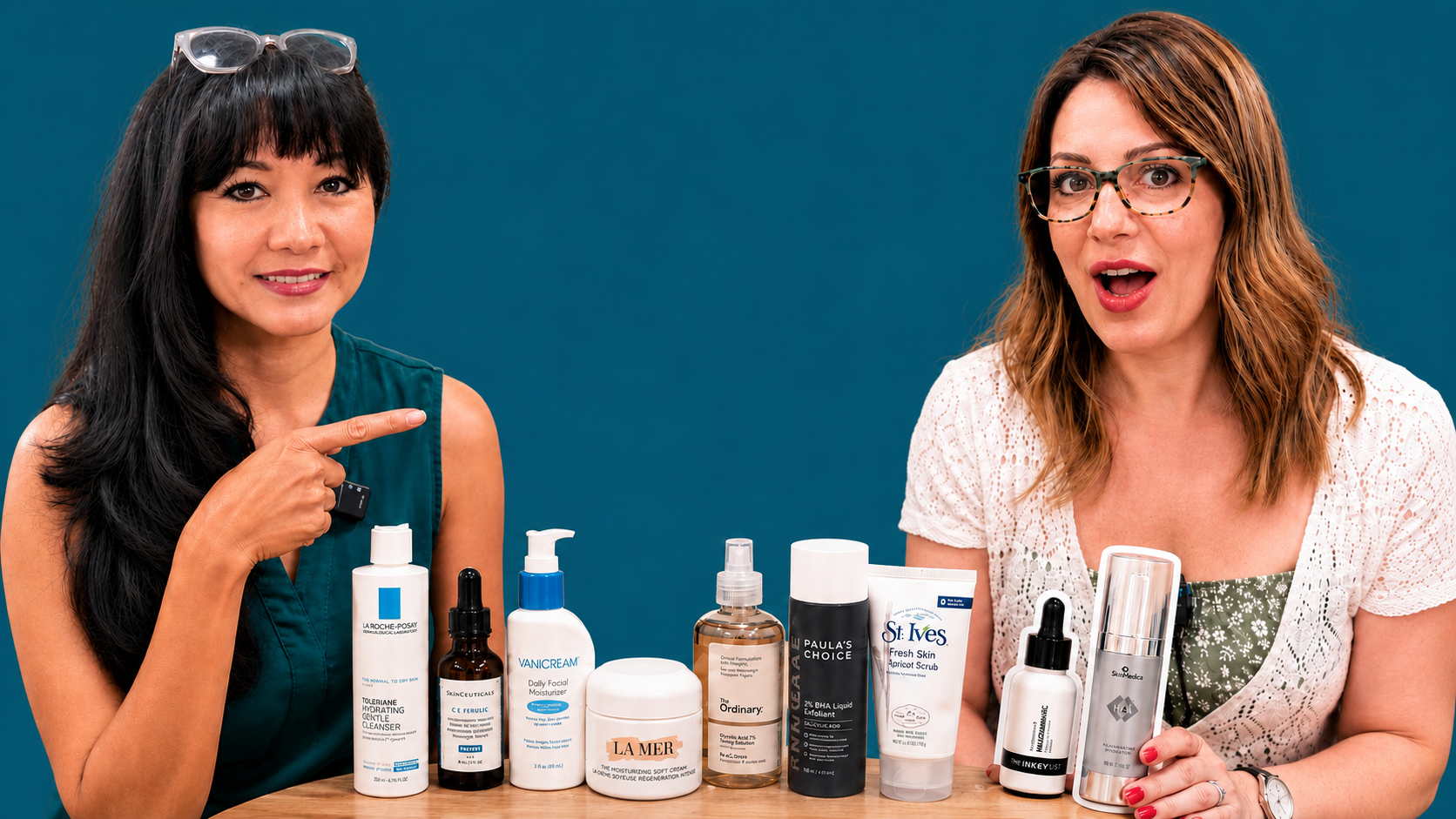
In this Beauty Lab Podcast episode, Velia quizzes Monina with real listener questions about perimenopause, menopause, and postmenopausal skin issues — and the answers are super practical, not fluffy.
We’re talking barrier support, hydration layers, what actually helps fine lines + crepey skin, why adult acne can show up with dryness, and the truth about fading dark spots (spoiler: sunscreen is non-negotiable).
Why Your Skin Feels Drier, Tighter, + More Sensitive All of a Sudden
If you’re in perimenopause or menopause and your skin suddenly feels dry and irritated, the biggest reason is simple:
Hormones + barrier changes.
As we move through peri and menopause, the skin tends to:
- produce less oil
- hold onto less water
So you’re dealing with dryness + dehydration at the same time. And when that happens, your skin barrier gets more easily annoyed.
That means products you used to tolerate (exfoliants, fragranced stuff, stronger actives) can suddenly sting, feel “too much,” or cause irritation. Even hot water can push it over the edge.
A simple routine shift that helps fast
If your skin is feeling tight and reactive, try this reset:
- Choose a more gentle cleanser (stop chasing “squeaky clean”)
- Hydrate in layers
- Seal it with a barrier-support moisturizer
- SPF daily (yes, even if you “aren’t outside much”)
The Best “Hydration Layering” Routine for Menopause Skin
When you can’t hold water in your skin the way you used to, you have to stop thinking “one product will fix it” and start thinking:
Layer + seal.
Here’s the simple breakdown Monina shared:
Start with a
humectant
These pull water into the skin. Look for:
- hyaluronic acid
- glycerin
Then add something calming. Especially if you’re stinging or reacting more. Look for:
- panthenol (vitamin B)
- beta glucan
Then seal it in with a stronger moisturizer
Look for barrier-support keywords like:
- ceramides
- fatty acids
And during the day:
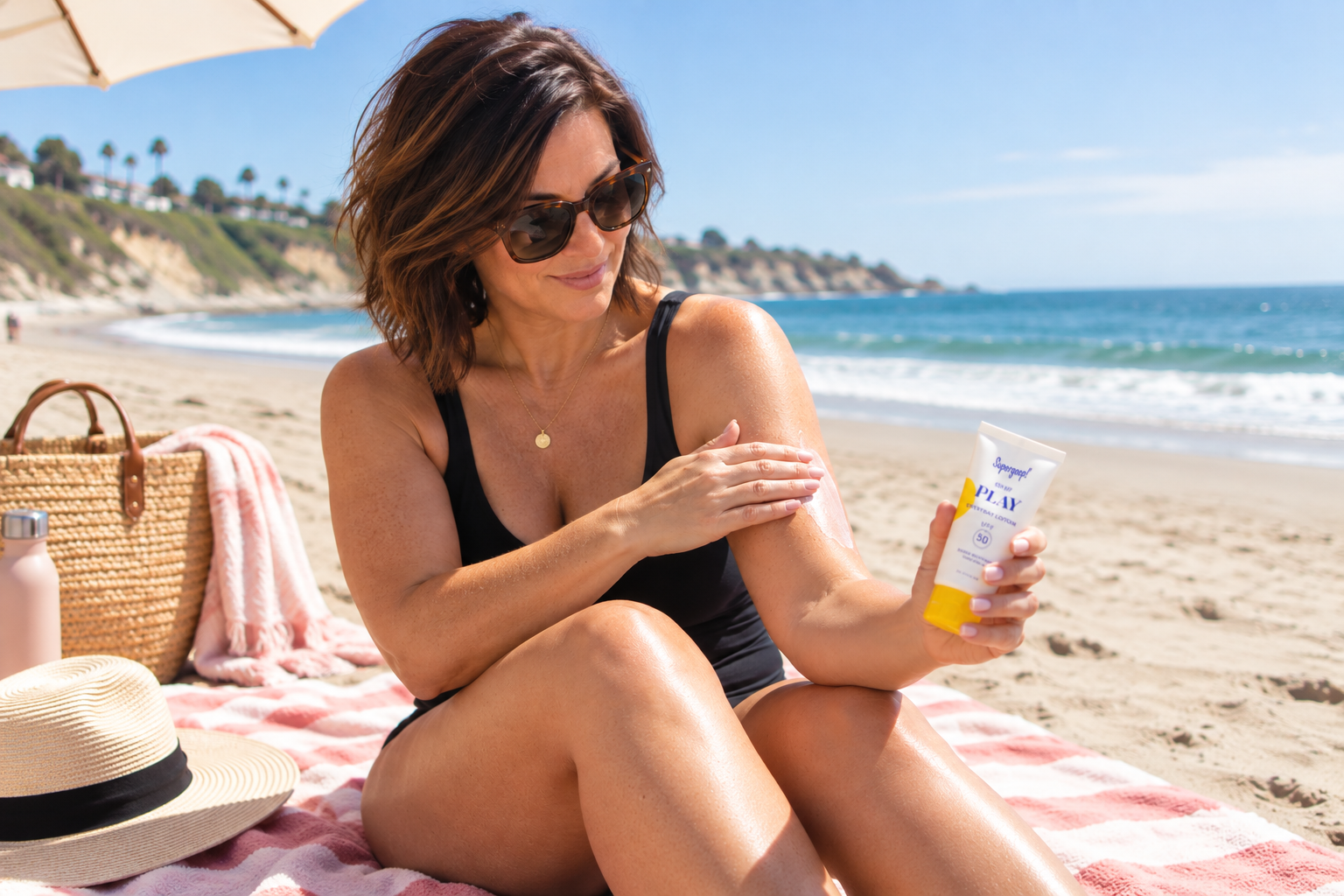
SPF every day + reapply when you’re outside
Because UV is inflammatory and can make all of this worse.
What Actually Works for Fine Lines, Crepey Skin, + Loss of Firmness
Let’s be real: most of us want jawline + neck firmness back ASAP.
But the truth is: this is a long game. You’re supporting collagen and elastin over time, not overnight.
Monina’s top three picks:
- SPF (non-negotiable)
UV breaks down collagen + elastin. And the big one here is UVA — as in “you will age.” UVA can get through windows and hits deeper in the skin. - Retinoids (especially retinaldehyde if you’re sensitive)
Retinaldehyde can be a great option for people who want results but can’t handle harsher retinoids. - Peptides + consistent hydration
Hydration matters more than people think. Your skin is mostly water — and when you lose water, you lose that plump, firm look.
She gave the best visual for this:
Think of a
grape versus a
raisin. Same fruit… treated differently. Hydration helps skin look fuller and smoother.
How long does it take to see results?
For texture improvement:
1–2 weeks
For firmness and collagen support:
8–12 weeks (with consistency)
Also important: if you jump into strong actives while your barrier is already compromised, you’ll peel, get mad, and quit. So barrier support comes first.
Why You Can Get Adult Acne + Dry Skin at the Same Time
This one is so common in perimenopause, and it feels unfair.
Here’s why it happens:
- hormones fluctuate
- oil can increase in certain zones (hello, T-zone)
- but overall the skin becomes more dehydrated
- inflammation goes up
- dead skin buildup can clog pores
The biggest mindset shift here:
Treat adult acne like inflammation management — not teenage acne.
That means:
- don’t over-strip your skin
- don’t go hard with harsh acne routines
- focus on gentle turnover + barrier support
What to do instead
- Use a gentle cleanser most days
- Add a salicylic cleanser 1–2x/week if needed
- Use retinaldehyde to support cell turnover and help prevent clogs
- Use a non-comedogenic moisturizer (yes, even with acne)
- Watch triggers like: poor sleep, stress, high sugar foods
- Avoid super occlusive ingredients like mineral oil or petroleum if they clog you up
If it’s cystic, painful, scarring, or not improving, that’s the moment to talk with a derm or licensed esthetician who understands adult acne.
Facial Oils + Acne: When Oils Help (And When They Don’t)
Velia asked a smart follow-up about facial oils — because it feels backwards to put oil on acne.
But here’s the key:
Not all oils act the same.
Oils like mineral oil and petroleum can be too occlusive for some people because they sit on top of the skin and block airflow.
But high-quality facial oils (like the one they mention in the episode) can:
- support the barrier
- calm inflammation
- help lock in hydration
- still allow the skin to “breathe”
This is also why oils can be great if you do gua sha — because you never want to do that on dry skin.
How To Fade Dark Spots + Melasma And Get Your Glow Back
If you only remember one thing from this whole section, it’s this:
No dark spot fades without sunscreen.
Pigment is like a leaky bucket. UV keeps refilling it. So if you’re trying to fade melasma or dark spots without daily SPF, you’re basically playing defense with no helmet.
A safe brightening routine (without wrecking your barrier)
SPF daily + reapply if outdoors
Then add
one gentle brightener (don’t stack five and wonder why you’re irritated).
Brighteners Monina likes for peri/menopause skin:
- tranexamic acid
- niacinamide
- vitamin C
- oleic acid (as mentioned in the episode)
Exfoliate 1–2x/week max
Especially for post-acne marks that sit closer to the surface. But don’t overdo it — irritation makes pigmentation worse.
Be consistent for 8–12 weeks
It can feel like nothing is happening until week 6… and then it starts shifting. Keep going.
Also: as skin gets more reactive during menopause, gentle brighteners + barrier support often outperform harsh peels.