Peptides for Skin: NAD, Collagen, and Ozempic Face
Peptides for Skin: What NAD, Collagen, and GLP-1 Microdosing Really Do
Peptides, GLP-1s, NAD: it can feel like everyone is talking about them and nobody is explaining them. On The Beauty Lab Podcast, we sat down with Kathy "KB" Burgett, founder and CEO of KB Fitness Exercise Studio in the Bay Area, to get a straight answer. KB holds a doctorate in health science from the University of the Pacific, is ACE certified, and has more than 20 years of experience. This post is educational, not medical advice, so please talk to your doctor before trying anything.
What Are Peptides and How Do They Work in Your Skin?
Peptides are short chains of amino acids. Kathy Burgett, who goes by KB, describes them as keys that unlock doors: tiny cellular messengers that tell your body to do something. Collagen is a good everyday example. Whether it comes as a cream or a powder, collagen is already a peptide, which is why it shows up in so many hair, skin, and nail conversations.
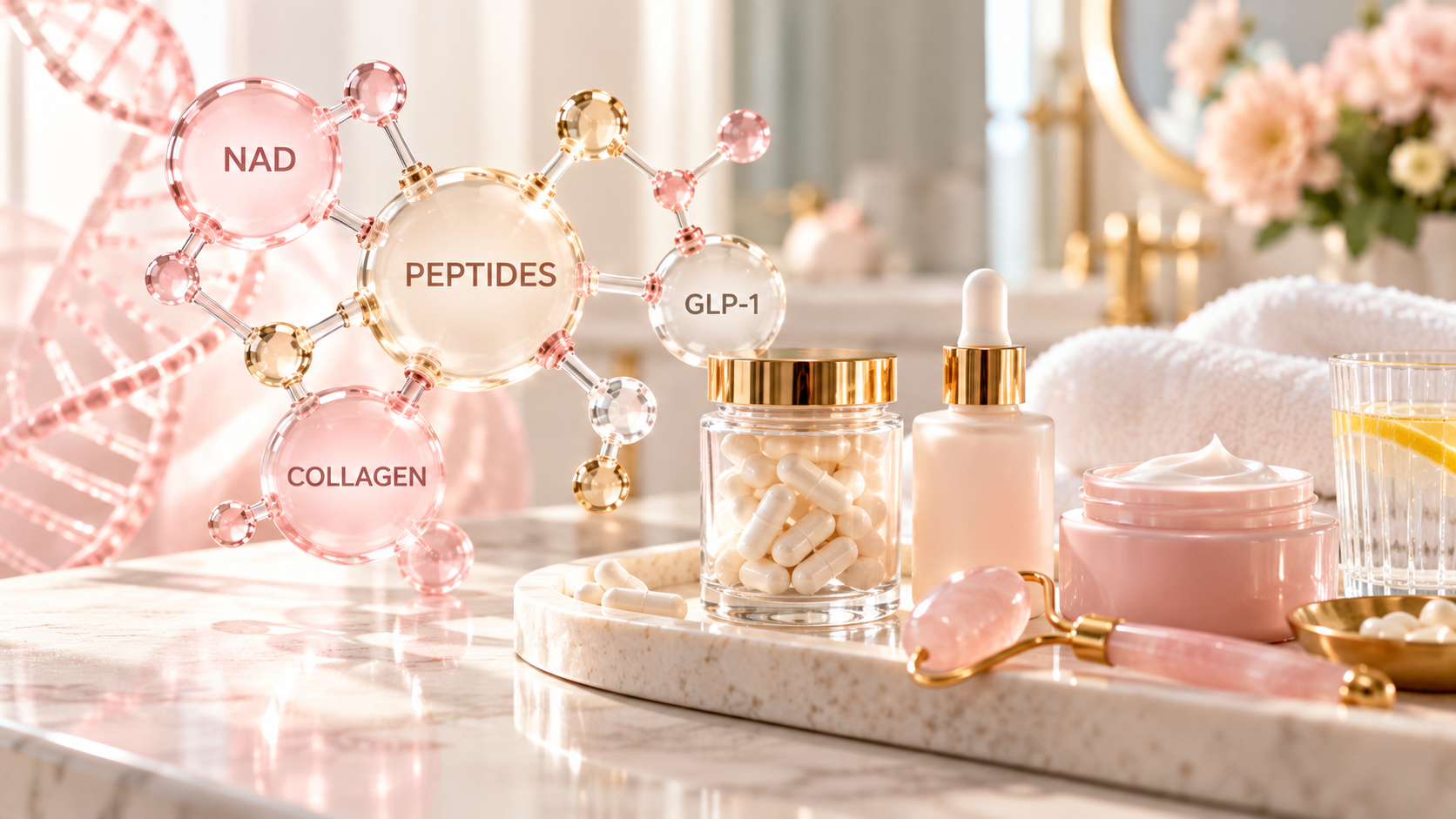
Which ones come up most? KB mentions methylene blue for the brain, GLP-1 for the gut, vagus nerve, pancreas, and insulin response, NAD for energy, focus, and the mitochondria (it is also linked to skin, hair, and nails), collagen, and sermorelin, which relates to growth hormone, sleep, and acne. A quick note: methylene blue and NAD are not technically peptides, but we are keeping KB's framing so you can follow along with how she talks about them with her clients.
She also mentions BPC-157 and TB-500, sometimes called the Wolverine stack, which she used for a frozen shoulder. Her caution: peptides can be volatile, so please do not try to mix anything yourself.
Topical Collagen or Injectable Peptides: Which Works Better for Skin?
Peptides come in several forms. Collagen can be used topically and taken internally. NAD can be an injection, a nasal spray (the option most of KB's clients choose), a powder, or a liquid. KB generally steers away from pills, with one exception: formulas made to absorb well, like her methylene blue pill.
If budget is a concern, the powder and liquid options are worth asking your provider about. The right choice depends on you, your health history, and your goals.
Peptide Safety: Why Your Doctor Comes First
KB is firm on this: stay away from Amazon and random websites when it comes to peptides. Quality, dosing, and purity are not something you can guess at from a product page.
Talk to a doctor first, especially about your liver, your thyroid, and any other medications you take. KB's own program requires a doctor form before clients start. And again, do not self-mix. This is one area where a shortcut can cost you a lot.
GLP-1, Microdosing, and Ozempic Face: What an Expert Wants You to Know
GLP-1 medications such as semaglutide and tirzepatide were originally developed for people with early blood sugar issues. KB explains that tirzepatide acts on more than one hormone pathway, which is part of why people talk about the two differently. Please check the details with your own doctor.
KB is nearly 71 and uses a tirzepatide microdose, not for weight loss. Her theory is that gut lining damage can lower your own natural GLP-1 production, and that this can happen even at 40. Antibiotics, ibuprofen, dental work, sinus infections, and a poor diet are all on her list of things that can irritate the gut.
Her advice is to microdose unless you have a major amount of weight to lose. She describes the feeling of fullness this brings, and notes that nausea medicine is often prescribed alongside. Her analogy for losing 5 to 10 pounds: it is like taking off a backpack you have been carrying around.
Side effects are real. KB points to constipation and hair loss, and her answer is a gut protocol, collagen, plenty of protein, and plenty of water. She also warns that rapid weight loss can mean muscle loss and a loss of facial fat, often called Ozempic face. Slower and gentler is the approach she prefers.
Peptides for Perimenopause and Menopause Skin: Where to Start
For women in perimenopause, KB says NAD is her first recommendation, calling it the best bang for your buck. Gut health comes next: collagen, probiotics, and prebiotics. Her programs run 3, 6, or 12 months.
A typical path she describes is NAD plus gut support for months 1 to 3, then considering a GLP-1 microdose in months 4 to 6. That is one coach's approach, not a universal rule, so build your plan with a provider who knows you.
This Is a Long Haul, Not a Quick Fix
KB's biggest message is that none of this is a quick fix. Results come from consistent work over months, and the foundation is still sleep, protein, movement, and gut health. Her closing reminder to listeners: take care of yourself.
How to Work With KB
KB works virtually with clients worldwide, and her contact details and social handles are at the end of this post.
Connect with Kathy "KB" Burgett
KB Fitness Exercise Studio (virtual, worldwide)
Phone/Text: 408-390-4418
Facebook, Instagram, LinkedIn, TikTok, and YouTube: kathyjoburgett
Resources and Links
Shop at Shop at Velia Beauty Co and use code THEBEAUTYLABPODCAST for 20% off.
Book with Monina at Moderne Beauty