Summer Skincare Tips: What to Change, What to Skip, and What Your Skin Actually Needs
Summer Skincare Tips: What to Change, What to Skip, and What Your Skin Actually Needs
Every summer, the same questions come up: Should I switch to a lighter moisturizer? Can I skip sunscreen if I'm not at the beach? Is it okay to exfoliate more when I'm sweating? Monina, licensed esthetician and co-host of The Beauty Lab Podcast, has been answering these questions from clients for years — and her answers might surprise you.
The good news is that your summer skincare routine doesn't need a complete overhaul. The not-so-good news is that most people are making at least one mistake that's actively working against their skin during the hottest months of the year. Here's what she wants you to know.
You can purchase some of the products mentioned at our Amazon Store!
If you purchase, we make a small commission without you paying more.
Do You Need to Change Your Skincare Routine for Summer?
The short answer is no — but with some strategic adjustments. Your skin's biology doesn't change because the calendar flips to June. The foundation of your routine stays the same: cleanse, tone, moisturize, eye cream, serum, and SPF during the day. That core doesn't shift.
What does change in summer are the environmental factors acting on your skin: more heat, more humidity in some areas, increased UV exposure, more sweating, and constant movement between outdoor heat and air-conditioned spaces. All of those factors can affect your skin's barrier, and that's where your adjustments should be focused — not on overhauling a routine that's already working.
One more note: if a skincare routine is working for your skin type, don't abandon it because something went viral on TikTok. Trends change constantly. Your skin type doesn't. What's formulated for your specific skin will always outperform whatever the algorithm is pushing this week.
The 4 Biggest Summer Skincare Mistakes
1. Skipping Moisturizer Because You're Already Sweating
This is the most common summer skincare mistake Monina sees — and it creates a problem most people don't connect to their routine. When skin feels oily or sweaty, the instinct is to cut out the moisturizer. But your skin is approximately 70% water, and moisturizer is what helps retain that water at the surface. Without it, you're leaving your skin barrier unprotected.
Here's what actually happens when oily skin skips moisturizer: the skin becomes dehydrated, and dehydrated skin compensates by producing more oil. Add heat and a lack of exfoliation into the mix, and you've created the perfect environment for clogged pores and acne breakouts. Oily skin and dehydrated skin can exist at the same time — they're controlled by different systems. Balanced skin has equal parts oil and water, and moisturizer helps maintain that balance.
The fix: don't cut moisturizer out. Swap it for a lighter texture, like a gel moisturizer, that won't feel heavy in the heat but still protects your barrier.
2. Skipping SPF
UV rays don't take a day off in summer — and they don't require direct sunlight to cause damage. UV rays can penetrate cloud cover and glass, which means they're reaching your skin even when you're driving or sitting near a window. In summer, when overall UV exposure is higher, the cumulative effect on your skin is significant.
The damage UV exposure causes doesn't show up right away. UV rays penetrate down into the dermis and break down collagen and elastin — the structural proteins that keep skin firm and elastic. People who spent years sun-bathing without protection often don't see the full effects until their 50s and 60s, when the skin loses elasticity and takes on a crepey texture. That damage was building over decades.
Beyond premature aging, unprotected sun exposure increases pigmentation — sun spots on the face and arms that are difficult to reverse — and raises the risk of skin cancer. Summer is a particularly important time to be seeing a dermatologist regularly and having any changing spots evaluated.
The ABC method for checking skin spots:
- A — Asymmetry: Is the spot symmetrical, or are the two halves uneven?
- B — Border: Is the border irregular, jagged, or changing shape?
- C — Color: Is the color changing, or is there more than one color within the spot?
If any of these apply to a spot you've noticed, bring it to a dermatologist. Early detection matters.
3. Over-Exfoliating
Sun exposure already causes inflammation in the skin. Adding aggressive scrubs or daily acids on top of that in summer creates a compounding problem: you're thinning skin that's already working overtime to protect itself from UV exposure, heat, and environmental stress.
Over-exfoliation in any season compromises the skin barrier, but in summer the consequences are more pronounced because the environmental stressors are higher. The barrier is your skin's first line of defense, when it's weakened, everything else gets in more easily, including UV damage and pollutants.
In summer, consider pulling back on strong acids and reaching for enzyme-based exfoliants instead. Enzymes are gentler and still support cell turnover without stripping the barrier. If you've been exfoliating daily, reducing to a few times a week during the summer months is a reasonable adjustment.
4. Chasing Viral Products Without Knowing Your Skin Type
Summer seems to bring out a wave of viral skincare content, and the temptation to try everything is real. But layering multiple new products, especially ones that weren't formulated for your skin type, adds up to increased inflammation, higher sensitivity, and a compromised barrier. The same skin barrier you're trying to protect from UV and heat damage.
Summer is actually the worst time of year to experiment with a lot of new products at once. Stick to what you know works, make one or two targeted adjustments for the season, and save the experimenting for fall when your skin isn't already managing elevated environmental stress.
What to Do for Your Skin After Sun Exposure
Even when you take all the right precautions, sunscreen, shade, limiting time in direct sun; longer days outside still take a toll. Here's what to do when you come back in.
If you've applied sunscreen consistently and didn't burn, your main job is to cleanse and restore. A gentle cleanse to remove sunscreen, sweat, and any environmental buildup, followed by your regular routine, is usually all that's needed.
If you did burn, or your skin is red and inflamed even without visible burning, the priority is cooling and calming the skin:
- Apply aloe vera gel directly to the affected areas. Pure aloe is anti-inflammatory and helps interrupt the ongoing burn process. Keep it in the refrigerator — the cool temperature makes it significantly more soothing on hot, irritated skin.
- Use a cool (not cold) damp cloth on the skin before applying any product. Ice or very cold water can be too shocking on already-inflamed skin.
- Reach for a body lotion or cream with calming ingredients — look for things like aloe, centella asiatica, or ceramides. Avoid anything heavily fragranced, which can further irritate compromised skin.
- Skip the actives that night. No retinol, no acids. Your skin is already inflamed — adding anything exfoliating or stimulating will make it worse.
The goal after sun exposure is to support the skin's recovery, not to treat it aggressively.
Simple Summer Skincare Swaps Worth Making
You don't need a new routine for summer. But a few targeted swaps can make your existing routine work better in the heat.
Switch to Lighter Textures
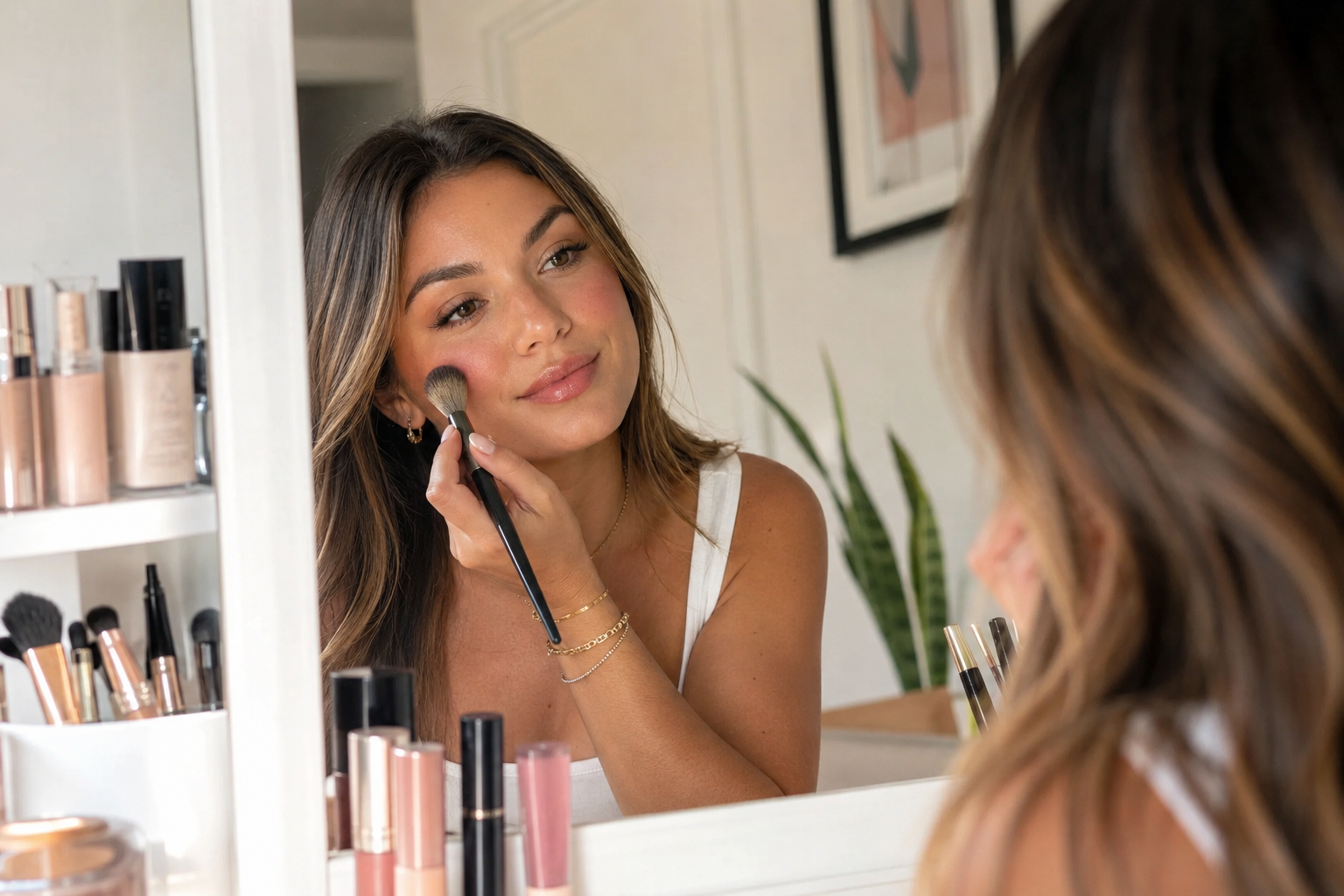
If your regular moisturizer feels heavy or is sitting on top of your skin in the heat, swap it for a gel moisturizer. Gel formulas deliver the same hydration with a lighter, more breathable feel, and you're more likely to actually use a moisturizer that's comfortable to wear. The same logic applies to foundation: if a full-coverage formula is feeling too heavy, a tinted moisturizer or BB cream with SPF built in is a reasonable warm-weather substitute.
Simplify Your Layers
More layers of product mean more opportunity for heat and sweat to break things down. In summer, consider trimming back on the number of products you're applying at once, fewer primers, lighter coverage, less powder. This isn't about skipping your skincare. It's about letting your skin breathe and reducing the chance that layers of product become uncomfortable or ineffective in the heat.
Rethink Your SPF Strategy
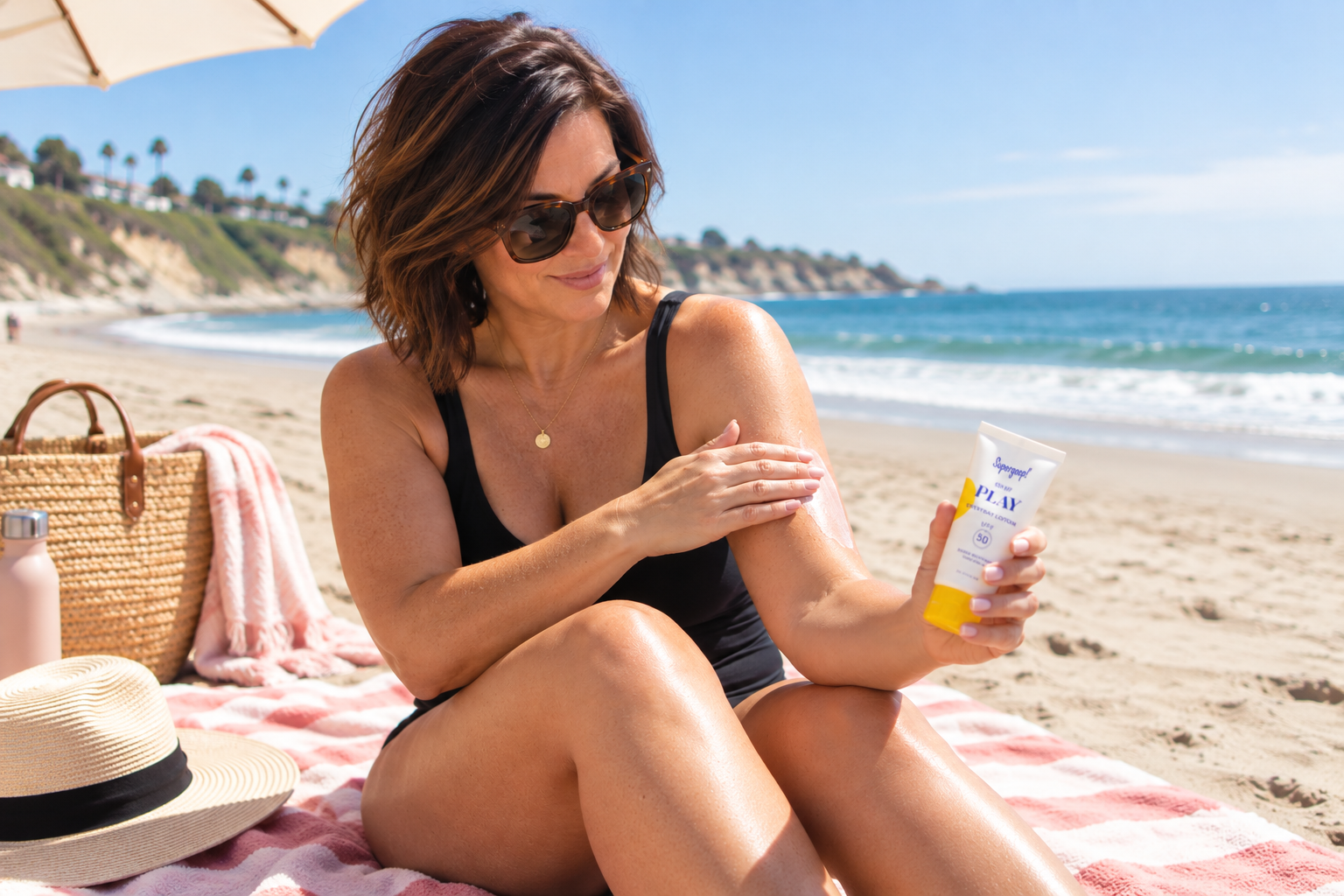
The most important thing about sunscreen is actually wearing it and reapplying it. A few practical ways to make that easier in summer:
- Keep a small sunscreen in your bag so reapplication is actually possible during the day.
- Consider a mineral or zinc oxide-based sunscreen. Mineral sunscreens provide broad-spectrum protection as a physical barrier on the skin and don't require reapplication as frequently as chemical sunscreens in some formulations.
- A setting spray with SPF (like the Kopari sunscreen spray) is a useful option for reapplying over makeup. It refreshes and sets the makeup while adding another layer of sun protection without requiring you to reapply foundation.
The SPF Layering Myth
One thing worth clearing up: if you have SPF 20 in your moisturizer and SPF 50 in your sunscreen, your total protection is not SPF 70. SPF numbers don't add. Your effective protection is whatever the highest SPF product in your routine is, in this case, 50. The layers don't compound. What matters is that you're applying your highest SPF product consistently and reapplying it throughout the day.
Add Antioxidants
Vitamin C and niacinamide are two of the most valuable additions to a summer skincare routine, not to replace sunscreen, but to work alongside it. Antioxidants help neutralize free radical damage from UV exposure and strengthen the skin barrier, which is already under more stress in summer. Vitamin C in particular is well-studied for its role in supporting collagen and reducing pigmentation over time. Used in the morning under SPF, it gives your skin an added layer of protection beyond what sunscreen alone provides.
Final Thoughts
Summer skincare doesn't have to be complicated. Keep the foundation of your routine intact, make a few targeted adjustments for the heat, and protect your skin barrier like it's the most important thing you're wearing, because it is.
The damage from skipping sunscreen and over-stressing your skin in summer doesn't show up immediately. It shows up years later, in premature aging, pigmentation, and skin that no longer has the structure it once did. The best time to take it seriously is now.
If you're not sure what your skin type is, Monina has a free skincare quiz.