At-Home Hair Removal + Body Devices Explained by Sivan Fishman, Biochemistry Expert
At-Home Hair Removal + Body Devices Explained by Sivan Fishman, Biochemistry Expert
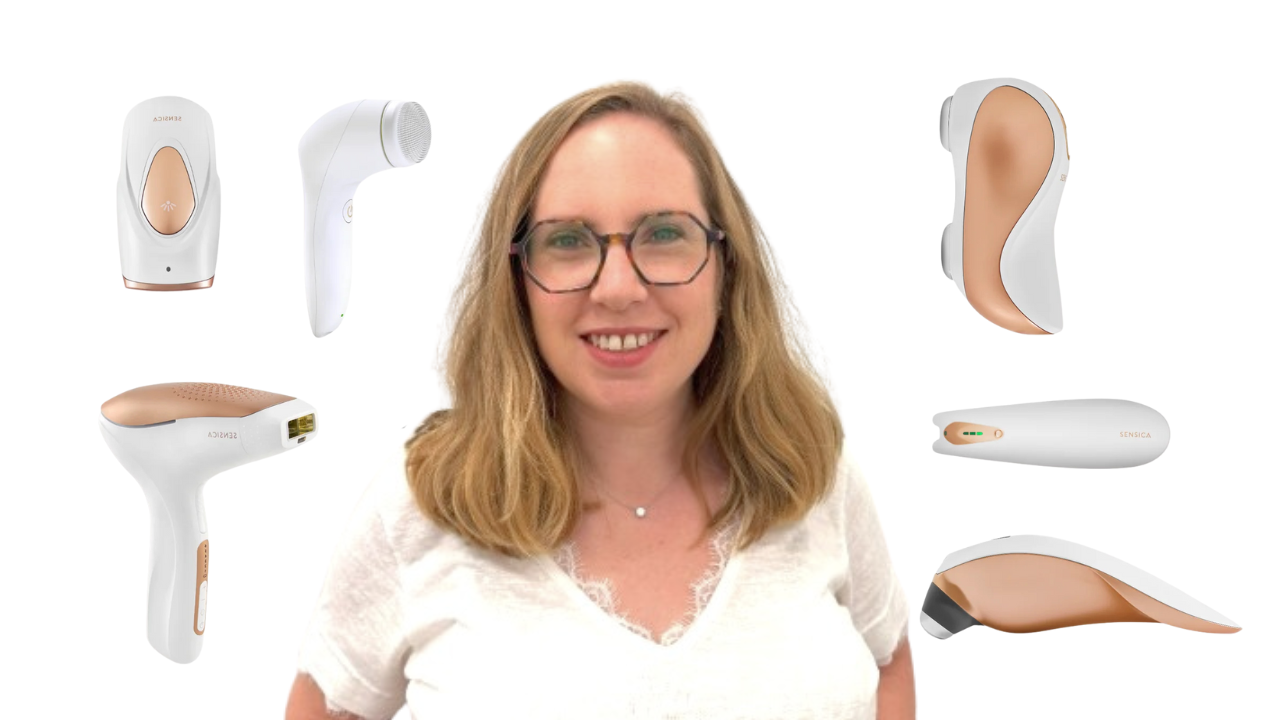
If you’ve ever tried an at-home hair removal or body firming device and thought, “This did absolutely nothing,” you’re not imagining it.
The at-home beauty device space is crowded, confusing, and full of big promises. Some devices are rooted in real science. Others are… not. The difference usually comes down to technology, safety controls, and consistency — not price or hype.
In this post, we’re breaking down what actually matters when it comes to at-home IPL and RF devices, based on insights shared by Sivan Fishman, VP of Global Compliance at Sensica.
The Biggest Misunderstanding About At-Home Devices
Many people assume that at-home devices fail because they’re “weaker” than in-clinic treatments. That’s not quite true.
What actually matters is whether a device can:
- Reach the correct target temperature
- Maintain it safely
- Do so consistently over time
Higher energy doesn’t automatically mean better results. In fact, with radiofrequency (RF) treatments especially, the goal is controlled heat — not intensity.
IPL Hair Removal: Why Results Vary So Much
IPL stands for Intense Pulsed Light. It works by sending light into the hair follicle, where melanin absorbs it, converts it into heat, and damages the follicle to slow regrowth.
Here’s the key detail many brands gloss over:
Melanin is in both hair and skin.
If too much light is absorbed by the skin instead of the hair, two things happen:
- Results are weaker
- Safety risks increase
That’s why device design matters more than marketing.
Why “Smart Sensors” Actually Matter
More advanced IPL devices include sensors that:
- Confirm full skin contact before flashing
- Continuously measure skin tone
- Prevent flashes on overly dark, tanned, or tattooed areas
This protects the skin and ensures the light energy is doing its job. Many lower-cost devices skip this step entirely, which explains inconsistent results.
Why IPL Doesn’t Work for Everyone (and Never Will)
This part is important — and often ignored.
IPL does not work on:
- White hair
- Very light blonde hair
- Gray hair
If a device claims otherwise, it’s not being honest. IPL depends on melanin. No melanin means nothing for the light to target.
Good devices set realistic expectations. That honesty is a feature, not a flaw.
How RF Devices Help With Skin Firmness + Cellulite
Cellulite isn’t a medical problem — it’s structural. As we age:
- Collagen production slows
- Skin becomes less firm
- Circulation and lymphatic drainage decrease
Radiofrequency (RF) devices work by gently heating deeper layers of the skin. This heat:
- Contracts existing collagen fibers
- Signals the body to produce new collagen
- Improves circulation
- Supports lymphatic drainage
The result is firmer skin and reduced appearance of cellulite — not overnight, but gradually.
Why Consistency Beats One-Time Treatments
RF and IPL devices are not “one and done.” They’re build-up technologies.
That’s actually where at-home devices shine.
When you can treat regularly:
- You maintain results longer
- You adapt to hormonal changes
- You avoid buying repeat treatment packages
- You control timing and comfort
This is especially helpful when hair regrowth happens due to pregnancy, menopause, or supplements.
Unlimited Pulses: A Detail That Saves Money Long-Term
Many IPL devices cap the number of flashes. That might sound generous — until you treat large areas like legs or arms.
Devices with unlimited pulses allow:
- Long-term use
- No replacement parts
- Ongoing maintenance
- Better overall value
It’s one of those specs that doesn’t sound exciting — until you need it.
At-Home vs In-Clinic: Which Is Better?
Neither option is “wrong.” It depends on lifestyle and goals.
In-clinic treatments:
- Can reach target temperature faster
- Require appointments
- Often involve ongoing maintenance costs
At-home devices:
- Reach the same target temperature more gradually
- Allow long-term maintenance
- Cost less over time
- Offer more control and comfort
For many people, the ability to maintain results at home is the deciding factor.
How to Choose a Device That’s Worth It
Before buying any at-home beauty device, look for:
- Built-in safety sensors
- Clear clinical explanations
- Honest limitations
- Maintenance guidance
- A real return policy
The best devices aren’t the loudest — they’re the most transparent.
Exclusive Beauty Lab Listener Discount
You can get 15% off Sensica devices with code BEAUTYLAB15 at buysensica.com.
Follow Sensica on Instagram for education, product updates, and behind-the-scenes science.