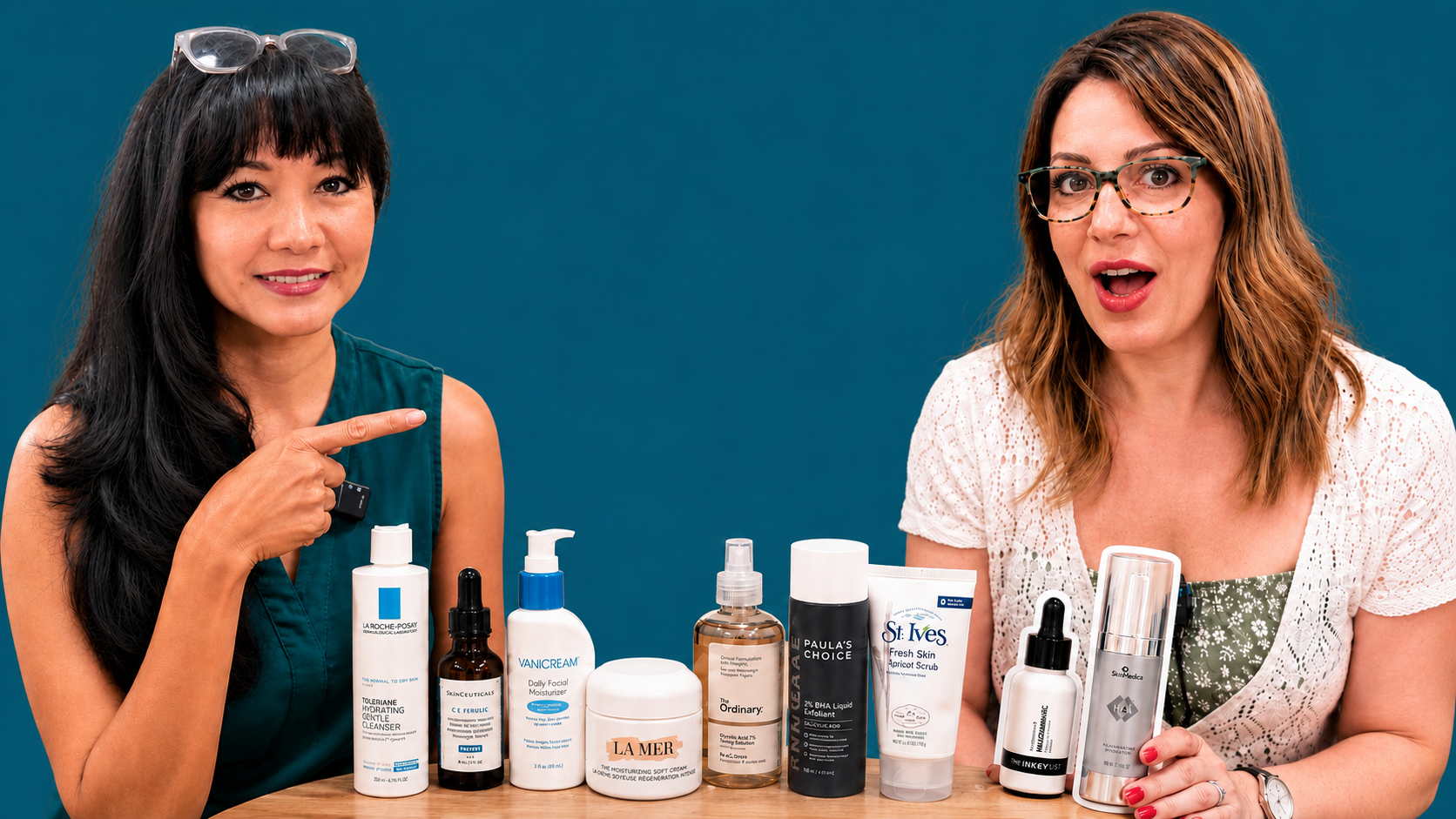
Winter Skin Myths: Cold Weather Skincare Tips That Actually Work
Winter Skin Myths: Cold Weather Skincare Tips That Actually Work

Cold weather doesn’t just bring cozy drinks and big sweaters — it brings some serious skin confusion too.
In this episode of The Beauty Lab Podcast, we’re breaking down the most common winter skincare myths so you know exactly what your skin actually needs when temps drop.
Let’s get into it.
Myth #1: “You Don’t Need SPF in Winter”
Short answer: yep, you still need sunscreen in winter.
Even when it’s cold, gray, or cloudy, UVA rays (the “you will age” rays) still:
- Go through clouds
- Go through car windows
- Reach deeper into the skin where your collagen lives
You may not burn, but the long-term damage is still happening.
If you ski or spend time in the snow, it’s even more intense because snow reflects UV rays straight back onto your skin.
Winter SPF Game Plan
- Wear sunscreen every morning
- Reapply if you’re driving or outdoors for long stretches
- Don’t forget your lips, neck, and ears
Myth #2: “You Need a Heavy Cream for Winter Skin”
Thicker doesn’t always mean better.
Heavy creams can:
- Clog pores
- Sit on top of the skin
- Stop your serums from absorbing
Instead of grabbing the richest cream you can find, focus on layering:
- Humectants like hyaluronic acid
- Facial oils (for nourishment + barrier protection)
- Barrier-supporting moisturizers (light gel or cream is fine)
This gives you real hydration, not just a coat of product sitting on top.
You can use the same method for your body — lotion + oil either layered or mixed together.
Myth #3: “Stop Exfoliating in the Winter”
Nope. Exfoliation is still your friend.
Winter dryness = more dead skin buildup.
And when dead skin layers stack up, your products can’t get through — it’s like putting moisturizer on a brick wall.
Gentle winter exfoliation options:
- Enzyme exfoliants
- Lactic acid 1–2x a week
- Skip harsh scrubs except maybe once a week
Your skin will look smoother, glowier, and your moisturizer will actually do its job.
Myth #4: “Oily Skin Doesn’t Need Moisture”
Here’s the trick: oily skin can still be dehydrated.
When your skin doesn’t have enough water, it starts overproducing oil to protect itself — especially in winter.
If your oily skin feels even oilier in cold weather, it’s a sign you need more hydration, not less.
Try:
- Hydrating serums
- Water-based gel moisturizers
- Light layers instead of heavy creams
Balanced hydration = balanced oil.
Myth #5: “More Products = More Hydration”
Too many layers can actually stop your products from absorbing.
If you’ve ever had things ball up or peel on your face, that’s oversaturation.
A simple, smart routine looks like this:
- Cleanse
- Tone (optional)
- 1–2 serums
- Facial oil
- Moisturizer
- SPF (AM)
You don’t need ten steps — you need the right steps.
Myth #6: “You Can’t Repair Your Skin Barrier in Winter”
Winter is the best time to repair your skin barrier.
Your skin’s renewal cycle slows down in the cold, which makes it the perfect season for:
- Hydration
- Barrier-supporting ingredients
- Calming and restorative treatments
How to support your barrier:
- Daily SPF
- Gentle cleansers
- Hydrating serums + oils
- Barrier creams
- LED light therapy
Strong barrier = calmer, softer, healthier-looking skin.